

0 7567 3000
0 7567 3000

Walailak University has jumped to 47th place worldwide in the Times Higher Education (THE) Sustainability Impact Ratings 2026, marking a historic rise from 93rd place last year.
The university was ranked among 1,646 institutions from 116 countries worldwide. Nationally, it was placed 3rd among 69 universities in Thailand. The ratings evaluate institutions globally on their contribution to the United Nations Sustainable Development Goals (SDGs).
The results, released on 24 June, show the university’s overall score climbed to 92.8, up from 89.7 the previous year. They also highlight Walailak University's performance across multiple SDGs, with four goals ranked among the world's top 30.
Walailak University ranked 5th globally for SDG 5: Gender Equality (1st in Thailand), 14th for SDG 11: Sustainable Cities and Communities (2nd in Thailand), 23rd for SDG 2: Zero Hunger (4th in Thailand), and 27th for SDG 14: Life Below Water (3rd in Thailand).
The university also achieved strong results in several other SDGs, ranking 35th globally for SDG 3: Good Health and Well-Being (3rd in Thailand), 69th for SDG 4: Quality Education (4th in Thailand), and 73rd for SDG 6: Clean Water and Sanitation (4th in Thailand).
According to Assistant Professor Dr. Amonsak Sawusdee, Director of the Center for Academic Services, Walailak University has systematically and concretely advanced sustainable development through the clear policy framework and strategic vision established by University President Professor Dr. Sombat Thamrongthanyawong.
"The University's achievements and growing recognition at both national and international levels reflect the successful integration of sustainability principles into practice, ultimately evolving into a strong Sustainability Culture within the Walailak community," Dr. Amonsak said.
He noted that this institutional transformation has been driven through the active participation of administrators, faculty members, students, staff, and external stakeholders, aligning closely with the strategic direction championed by Vice President Associate Professor Dr. Warit Jawjit to institutionalize sustainability as a core organizational value.
A cornerstone of this year's success is the university's focus on academic services and community engagement, spearheaded by the implementation of the “WU Happy Tree Model.” This innovative social development framework serves as a key mechanism to translate academic knowledge, research, and innovation into practical solutions that address societal challenges and enhance community capacity.
"Through this holistic and participatory approach, Walailak University continues to position itself as a leading institution for sustainable development, generating transformative impacts that benefit society while strengthening its international reputation as a university committed to creating shared value for people, communities, and the planet," Dr. Amonsak added.
The THE Sustainability Impact Ratings, formerly known as the THE Impact Rankings, assess global higher education institutions across four areas: research; stewardship of resources and people; outreach and engagement with communities; and teaching related to the SDGs. An institution's overall score is calculated based on its performance in SDG 17: Partnerships for the Goals (22 percent) and its three highest-performing SDGs (26 percent each).
Key Projects Supporting SDG Performance
SDG 5: Gender Equality
Ranked 5th worldwide for SDG 5, Walailak University promotes an inclusive learning and working environment through policies on gender equality, non-discrimination, and anti-harassment. The university supports women's health and well-being through mentoring programs and access to healthcare services. It also encourages female participation in traditionally underrepresented fields, including engineering, science, and architecture.
SDG 11: Sustainable Cities and Communities
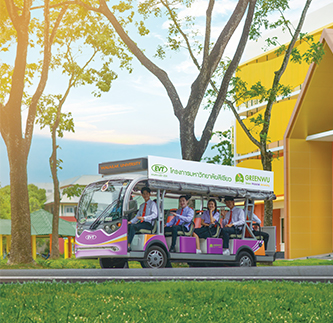
Ranked 14th worldwide, Walailak University provides public access to natural and cultural heritage sites, including the Tumpang Archaeological Site — a Brahmanist-Buddhist heritage area located on campus — and Walailak Botanic Park. It also promotes low-emission mobility through electric shuttle services and electric vehicles, while collaborating with government agencies to support affordable housing projects for disadvantaged communities.
SDG 2: Zero Hunger
Ranked 23rd worldwide, Walailak University supports food security through student welfare programs. Its Free Meals Grants program, run in partnership with local food vendors, assists students facing financial hardship. The university also provides training and outreach activities related to sustainable agriculture, aquaculture, and food production for communities.
SDG 14: Life Below Water
Ranked 27th worldwide, Walailak University collaborates with national and international organizations to restore and sustainably manage blue swimming crab populations and marine biodiversity in the southern provinces of Nakhon Si Thammarat and Surat Thani. The university also works with local communities to promote sustainable coastal resource management and supports low-carbon tourism projects.
SDG 3: Good Health and Well-Being
Ranked 35th worldwide, Walailak University conducts projects that support local communities, vulnerable populations, and migrant groups while working closely with national and international health organizations. These collaborations help strengthen the capabilities of healthcare professionals and students and improve healthcare delivery and public health outcomes.
SDG 4: Quality Education
Ranked 69th worldwide, Walailak University promotes inclusive and lifelong learning through both formal and non-formal education. Digital learning resources, including WU MOOC, research repositories, e-books, blogs, and online lectures, provide public access to knowledge across a wide range of disciplines. The university also supports educational equity and innovative teaching through projects such as the Early Childhood Equity Education Project and the Innovative Teaching Development Project based on the Sufficiency Economy Philosophy.
SDG 6: Clean Water and Sanitation
Ranked 73rd worldwide, Walailak University operates a campus-wide water supply system supported by the Chala Nusorn Reservoir, which has a storage capacity of 4.9 million cubic meters. More than 140 drinking water stations provide access to clean drinking water across campus. The university also works with local, national, and international partners on integrated water resource management and environmental sustainability projects.